Oncolytic Immunotherapy · Pre-clinical

When immunotherapy falls short — striking cancer at its Achilles' heel.

A dual-action oncolytic immunotherapy for the hardest-to-treat cancers — turning the tumor into a biofactory that dismantles its own defenses and unleashes the full immune army.

Spinning out of Prof. Vincenzo Cerullo's IVT Lab — University of Helsinki
€4M → €8M
Raise, matched 1:1
5
Manuscripts
80+ / 15+
In-vitro / in-vivo studies
2028
Target Phase I
Scroll
01 — The Problem

Immunosuppressive cancers: a high unmet need

Pancreatic, triple-negative breast, and microsatellite-stable colorectal cancers don't respond to any approved immunotherapy — and survival has barely moved.

PDAC
Pancreatic ductal adenocarcinoma
425KAdvanced cases dx'd / yr
4.6moMedian survival
3%5-year survival

TNBC
Triple-negative breast cancer
120KAdvanced cases dx'd / yr
12moMedian survival
11%5-year survival
MSS CRC
Microsatellite-stable colorectal cancer
760KAdvanced cases dx'd / yr
22moMedian survival
12%5-year survival

More efficient therapies are desperately needed.

Standard-of-care includes chemotherapy combinations, ADCs for TNBC, and anti-angiogenic / anti-EGFR drugs for MSS CRC. These remain insufficient, and immunotherapies have mostly shown no clinical benefit.

02 — The Challenge

The tumor's immunosuppressive stronghold

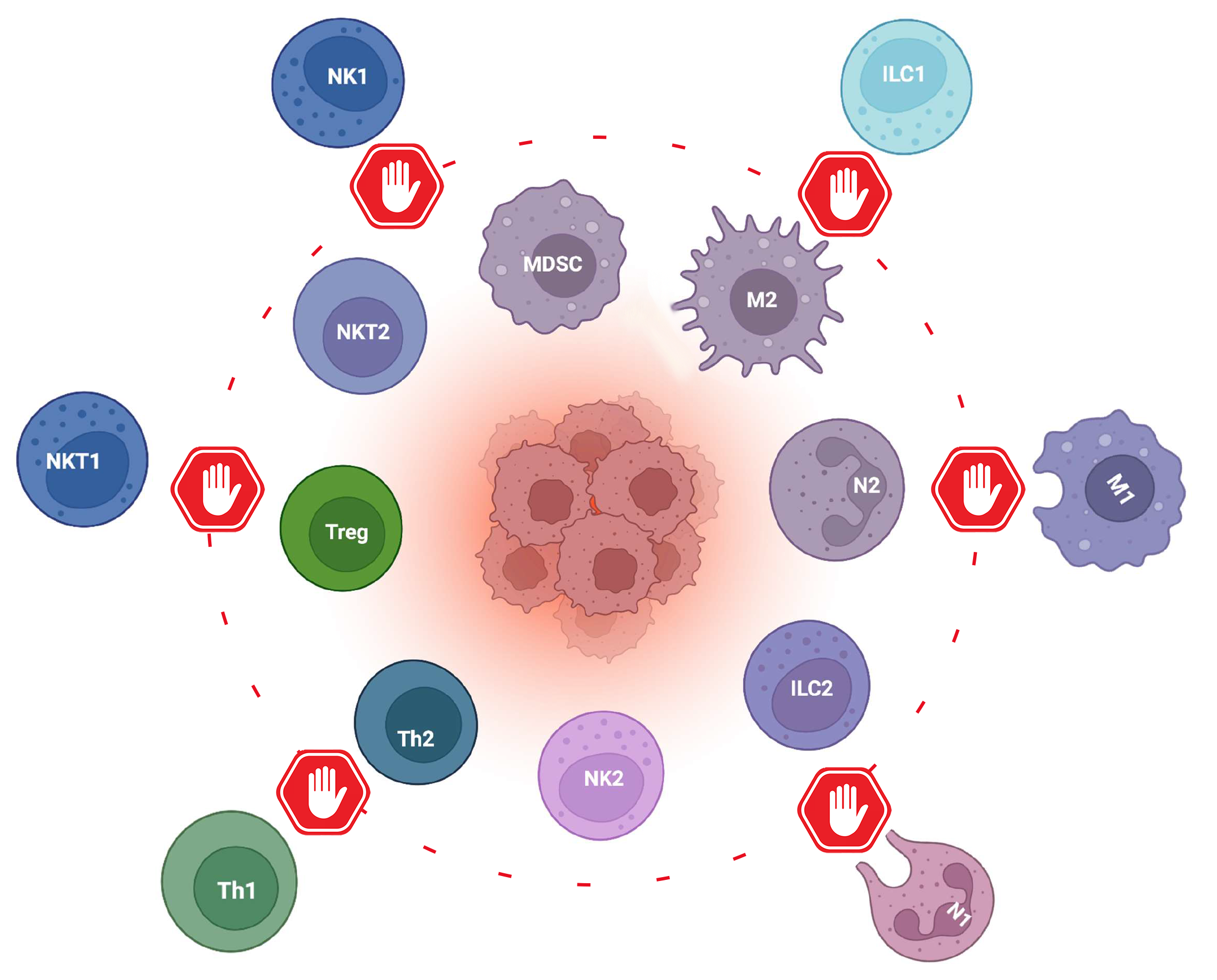
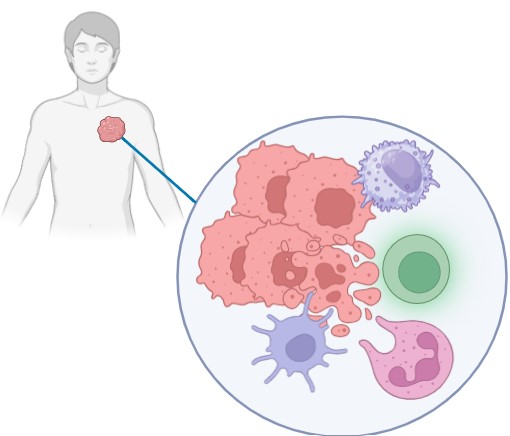
Immunosuppressive cells build a physical barrier around the tumor — protecting it, feeding it, and driving metastasis. The tumor microenvironment is where immunity hits a wall, and a mute button.
01
Wake up the immune system
Mobilize the body's defenses to recognize and attack the cancer.
02
Clear the suppressive barrier
Dismantle the immunosuppressive shield within the tumor itself.
None of the approved immunotherapies do both.
Diagram of the tumor immunosuppressive stronghold: a central tumor surrounded by immunosuppressive immune cell types
The tumor microenvironment (TME) — a fortress of immunosuppressive cell types surrounding the tumor.
AdCab injected into a patient travels to the tumor and turns tumor cells into biofactories producing a PD-L1 targeted peptide
Injected systemically, AdCab homes to the tumor — sparing healthy tissue — and converts tumor cells into biofactories.
03 — The Solution

AdCab: a precision virus armed with an Fc Dual Engager

An oncolytic adenovirus that travels straight to the tumor, leaving healthy cells intact — then turns tumor cells into biofactories producing a chimeric, PD-L1-targeted peptide.

Action 01
Disarms tumor defenses
Reignites immunotherapy by clearing the suppressive barrier.
Action 02
Rallies the immune army
Activates the full breadth of immune cells against the tumor.

To date, no licensed immunotherapy effectively targets both immune suppression and immune stimulation.

04 — The Technology

Fc Dual Engager — a unique Fc domain

The peptide's novelty is its Fc: engineered as an IgG / IgA chimera. It broadly activates multiple immune cell types to mount a robust anti-tumor response while simultaneously eliminating immunosuppressive cells inside the tumor.

ADCC · PMNs / PBMCs ADCP Trogocytosis CDC
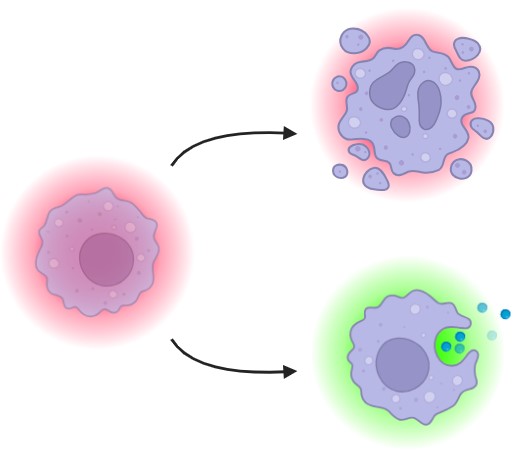
Kills or re-educates
On binding a suppressive cell, the IgA arm either eliminates it — or flips it from a pro-tumor to an anti-tumor state.
Local production, enhanced safety
Produced and active within the tumor, limiting systemic exposure and toxicity.
Schematic of the IgG/IgA chimeric Fc Dual Engager antibody architecture
IgG / IgA-chimeric Fc — a fully functional Fc that engages the full antibody-effector toolkit.
A suppressive cell is either killed or repolarized from a pro-tumor to an anti-tumor state
Repolarization: a suppressive cell switched from pro-tumor to anti-tumor.
05 — Differentiation

AdCab vs. standard checkpoint inhibitors

Checkpoint inhibitors block one axis. AdCab's dual engager engages the whole effector repertoire — and acts where it matters, inside the tumor.

AdCab — Fc Dual EngagerDual-action
  • IgG / IgA-chimeric, fully functional Fc domain
  • Induces ADCC by PMNs/PBMCs, ADCP, trogocytosis & CDC
  • Kills suppressive immune cells — or restores anti-tumor function
  • Activates all immune cell types against the cancer
  • Local production in the tumor → enhanced safety
Standard checkpoint inhibitorsSingle-axis
  • Type IgG Fc with attenuated effector functions
  • Purely PD-1 / PD-L1 axis blocking
  • Induces only ADCC by PBMCs, CDC
  • Does not affect the suppressive immune compartment
  • Systemic exposure — only part reaches the tumor
AdCab Checkpoint inhibitors ADCs Chemotherapy mRNA vaccines Oncolytic viruses
Safety profile High High Medium Low High High
Activates multiple immune populations Yes NoNoNoNoNo
Targets the tumor microenvironment Yes NoNoNoNoNo
Targets the tumor Yes YesYesYesYesYes
Usable across cancer types Yes YesYesYesNoYes
Examples MSD, BMSGilead, AstraZenecaGenentech, Roche, Eli LillyBioNTechLokon Pharma

AdCab addresses multiple biological barriers simultaneously.

06 — Proof of Concept

Convincing pre-clinical data: dual action

Across cancer models, AdCab depletes suppressor cells, activates the immune system, controls tumors better than checkpoints, and builds lasting memory.

01
Depletes suppressor cells
Granulocytic & monocytic MDSCs and TAMs cleared from the tumor.
02
Activates immune cells
Drives active NK cells, CD8+ T cells and neutrophils.
03
Superior tumor control
Outperforms PD-L1 checkpoint inhibitors across models.
04
Lasting memory response
No relapse on tumor re-challenge — a vaccine-like effect.
Superior tumor control
MSS CRC · CT26 · tumor volume (mm³)
0400800 Days post-engraftment
MockmPD-L1AdCab
Survival without CD8+ T cells
TNBC · 4T1 · CD8-depleted · % survival
050100 Days
MockmPD-L1AdCab
Suppressive cell clearance
TNBC · 4T1 · TAMs (% CD11b⁺ F4/80⁺)
01020 MockAd-5/3mPD-L1AdCab
AdCab clears the most

Representative pre-clinical data, simplified for illustration. Source: Hamdan et al., JITC, 2021, and IVT Lab studies.

MSS CRCOutperforms PD-L1 checkpoints & prevents relapse
TNBCClears suppressive cells from the tumor
TNBCWorks even without CD8+ T cells
PDACSupercharges failing immunotherapies
80+
In-vitro tests
15+
In-vivo tests & PDOs
5
Manuscripts

Pre-clinical proof of concept — finished.

07 — Platform

AdCab is a platform technology

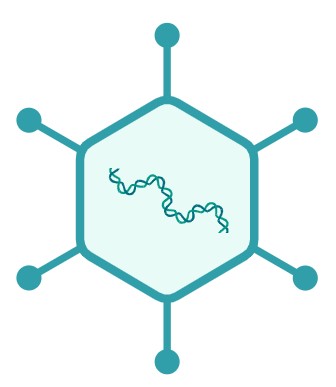
Beyond a single asset, AdCab is a modular engine for generating novel compounds against new targets — rapidly, using the GAMER-Ad method.
01
Modular design
02
Multiple tumor targets
03
Combination-ready with immunotherapies
04
Pipeline expansion
One clinical success validates the entire platform.
GAMER-Ad platform schematic — a modular adenovirus engine
Rapid generation of novel compounds via the GAMER-Ad method (Hamdan et al.).
08 — Market

A large, growing market

AdCab sits at the intersection of a fast-growing indication-specific market and the broader immunotherapy wave.

mCRC-MSS · indication-specificCAGR 8.5%
$6.8B
2025
$15.3B
2035
Cancer immunotherapy · globalCAGR 8.4%
$121B
2025
$294B
2035
TAM
$65BTotal addressable — 3 indications
SAM
$24BServiceable — EU + US (37%)
SOM
$481M–1.2BObtainable — 2–5% target share

Based on global incidence across PDAC, TNBC and MSS CRC and immunotherapy pricing of ~$50,000 per patient (6–10 treatments).

09 — Business Model & Roadmap

Staged value creation, 2026–2031

A capital-efficient path: advance the lead asset to early clinical proof of concept, partner after validation, and expand the platform in parallel.

2026
SpinoutPreclinical PoC & spinout preparations
2027
CTA-enablingToxicology & stability studies
2028
CTA + GMPSubmission & clinical batch release
2029
FPI · Phase IFirst patient in
2030
Phase ISafety & translational data
2031
Clinical PoCMature data → partnering
Spinout
CMC
Clinical Validation

Strategic buyers & comparable acquisitions

Unique dual-targeting MoA, improved IO responses, and a platform built for combination therapies — exactly what acquirers reach for.

$1.9B
Amgen → Five Prime
After Phase II results
$4.9B
Gilead → Forty Seven
After Phase Ib results
$2.2B
Pfizer → Trillium
At Phase Ib/2
01Licensing 02Co-development 03Regional licensing 04Acquisition
10 — Regulatory

A clear EU regulatory pathway

The plan pursues SME and PRIME status plus orphan drug designation — unlocking accelerated assessment, free protocol assistance, and 10 years of market exclusivity after approval.

Non-clinical2027
SME meeting ITF meeting · apply SME status ODD application PRIME status EMA scientific advice Pre-CTA · NSA
CTA~2028 · 4–6 months
CTA application CTA approval
Clinical2029 →
Phase I Phase II Phase III MAA review

ODD = orphan drug designation · PRIME = Priority Medicines · SME = small/medium enterprise · ITF = Innovation Task Force · NSA = national scientific advice · MAA = marketing authorization application.

11 — Intellectual Property

A protected, global portfolio

National filings completed in the US and EU; office actions received and responded to in both regions. Additional filings are planned for comprehensive coverage.

RegionIdentifierPriority date
FinlandFI20215115A2021-02-04
PCTWO2022167729A1
United StatesUS2024294605A1
European UnionEP4288080A1
12 — Team

A team that has done this before

Seven years building AdCab, alongside one of the world's most recognized oncolytic-virus scientists and a commercialization lead who has taken this exact journey to the clinic.

VC
Scientific Advisor · Inventor
Prof. Vincenzo Cerullo
Head of Drug Discovery, Univ. of Helsinki · IVT Lab

Globally recognized leader in oncolytic virotherapy — ranked top 0.1% worldwide (Expertscape). Founder of Valo Therapeutics; provides strategic guidance and an extensive network across academia, industry and investors.

Dr Firas Hamdan
Scientific Lead · Inventor
Dr Firas Hamdan, PhD
Cancer immunology expert · post-doctoral researcher

Inventor of AdCab with first-principles command of its design and mechanism — led the platform from concept through validation at IVTLab. Author of 20+ publications (Nature Communications, ACS Nano).

Dr Tuuli Ranki
Commercialization Lead
Dr Tuuli Ranki, PhD
Oncolytic virus & pharma industry expert

10+ years from discovery to commercialization. Co-founder of Valo Therapeutics and former VP of Preclinical Development & IP; prior oncology roles at Sanofi and Gilead Sciences.


150+
Scientific publications
20+
Life-science patents
2
Spinoff companies
Affiliations & track record
University of Helsinki Valo Therapeutics Sanofi Gilead Business Finland SPARK Finland
13 — What We Deliver

Six reasons AdCab matters

01
Unmatched efficacy
Dismantles tumor defenses and drives full immune activation.
02
Safety & precision
Precision delivery puts the drug exactly where it's needed.
03
Synergy
Supercharges existing immunotherapies — even in resistant tumors.
04
Efficiency
Poised for IND: experienced team, clear path, partners in place.
05
Scalability
A scalable platform with clear differentiation and blockbuster potential.
06
Hope
Built for the hardest-to-treat cancers — where the need is greatest.
The Ask

€4M to reach Phase I

€4M
Our ask
+
€4M
Non-dilutive gov. funding
=
€8M
Total runway

Matched 1:1 with non-dilutive government funding. A capital-efficient model — regional cost advantages, a lean experienced team, and tight collaboration with Prof. Cerullo's group — with several value inflection points and limited dilution.

Runway through
  • 01IND / CTA-enabling pre-clinical studies
  • 02GMP manufacturing for clinical supply
  • 03Regulatory submission (IND / CTA)
  • 04Preclinical platform development
  • 05Clinical trial readiness

Let's talk about reaching the clinic.

If you can help us get there — capital, network, or partnership — reach out.

✉ Firas.hamdanhissaoui@helsinki.fi